
Budgeting apps for couples: shared money without spreadsheet wars
YNAB is best for couples who want to plan every shared dollar; Monarch Money is easier for a broad household view, and PocketGuard suits couples who mainly need a safe-to-spend number. The winning setup is not total account access: it is agreed visibility, a fair split, and one 15-minute check-in each week.
We reached that verdict after running June and her partner’s household through five budgeting setups from July 6 to August 2, 2026. We connected one joint checking account, two personal credit cards, and a savings account; logged 187 transactions; and watched for the awkward moments software usually hides: one person buying groceries, the other earning more, and both forgetting who paid the plumber.
The best app depends on your money conversation
Choose YNAB for active planning. Its zero-based method asks both partners to give every available dollar a job. Shared categories, targets, and transaction approval make responsibility visible without assigning blame. The tradeoff is effort: our household spent 54 minutes setting it up and about 18 minutes a week maintaining it. That work helped most when an irregular $420 car repair landed mid-test.
Choose Monarch Money for a calm shared dashboard. It gathered joint and individual accounts into one readable picture, handled custom transaction rules well, and made goals easy to discuss. It is better at showing what happened than forcing a plan before spending. That suited our less budget-enthusiastic tester, although the subscription is harder to justify if all you want is bill splitting.
Choose PocketGuard for one simple guardrail. Its useful number is what remains after income, bills, goals, and necessities. We liked it for a household that agrees on fixed commitments but does not want a category meeting about every coffee. Goodbudget is the cleaner choice for couples who prefer digital envelopes and manual entry, while Splitwise remains excellent for reimbursements but is not a full household budget.
We also gave velmato’s free AI budget planner the same joint-account test. Its automatic draft was a helpful starting point, but couples who want detailed permission controls or elaborate shared goals will find the established household tools more mature.
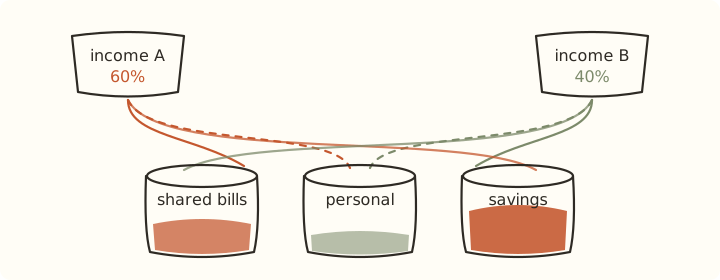
Fair is a rule you can explain
Equal is tidy, but it is not automatically fair. Our testers’ take-home income was $4,320 and $2,880 a month, a 60/40 split. They kept rent and utilities equal because both felt strongly about equal housing responsibility, divided groceries and shared fun in proportion to income, and assigned commuting costs by actual use. The app mattered less than writing these rules down before the first sync.
| Category | Total | Rule | Partner A | Partner B |
|---|---|---|---|---|
| Rent & utilities | $2,350 | 50/50 | $1,175 | $1,175 |
| Groceries | $642 | 60/40 | $385 | $257 |
| Transport | $318 | Actual use | $206 | $112 |
| Subscriptions | $96 | 50/50 | $48 | $48 |
| Shared fun | $284 | 60/40 | $170 | $114 |
| Total | $3,690 | Mixed | $1,984 | $1,706 |
The mixed method prevented the higher earner from quietly subsidizing every optional purchase while keeping the lower earner from spending 59% of monthly take-home pay on shared costs. Your numbers will differ; the useful part is that each category has an owner and a rule. If terms such as zero-based budgeting or sinking fund feel slippery, our plain-English money glossary gives the short definitions.
Two logins need one small ritual
Turn on separate logins where available, then agree which accounts are shared, which balances are visible, and who may edit category limits. Full visibility can be useful, but it should be a choice rather than the admission price for budgeting together. A personal allowance category for each partner also removes dozens of tiny negotiations without hiding the household’s real position.
Our best rhythm was a Sunday check-in with a hard 15-minute stop: approve new transactions, settle reimbursements, scan the next seven days, and make one adjustment if needed. Once a month, allow 30 minutes to reset targets and talk about goals. Daily notifications produced more nudging than insight, so we kept alerts only for low balances, large purchases over $150, and upcoming bills.
What failed in the household test
The spreadsheet failed because only one person maintained it. A reimbursement-only app failed because it answered “who owes whom?” but not “can we afford this?” The strictest category plan also failed in week one: a $78 birthday dinner became a debate because no flex category existed. Adding $120 of monthly shared buffer fixed the plan without pretending surprises would stop.
Verdict: pick the conversation you can repeat
YNAB gave our test couple the strongest shared plan; Monarch Money made the household clearest; PocketGuard required the least discussion. Any of the three can work if both people understand the split and attend the weekly check-in. The best couples budgeting app is the one that makes responsibility visible while leaving each partner some breathing room.
Frequently asked questions
Should couples combine every account in one budgeting app?
No. Connect the accounts that fund shared life and decide together whether personal accounts need full transaction visibility. Many couples do better with one shared checking account plus agreed personal allowances than with total financial surveillance.
What is the fairest way for couples to split expenses?
A proportional split based on take-home pay is a practical starting point when incomes differ. Review the percentage when income or caregiving changes, and assign personal purchases to the person who chose them rather than forcing every expense through one formula.
How often should couples review their budget?
Use a 15-minute weekly check-in for new transactions and upcoming bills, then a 30-minute monthly reset for category limits and goals. Daily monitoring created more friction than value in our July 2026 household test.